From Reactive to Proactive: How AI Is Quietly Rewriting Fleet Safety Culture in 2026
AI dash cams are finally cheap and reliable enough to flip fleet safety from reactive to proactive. What the shift looks like — and what to weigh first.
Key takeaways
- AI is flipping fleet safety from reactive (reviewing incidents after the fact) to proactive (catching risky behavior before it becomes a collision) — at scale, without adding headcount.
- A modern in-cab stack does three things: it sees (on-device computer vision), intervenes (an immediate audio cue in the cab), and learns (events scored and trended by driver and route).
- The ROI has finally tipped: insurers offer roughly 5–15% premium credits for video-backed coaching, and edge-AI dashcams have dropped from over $1,000 to the $300–500 range.
- The technology is the easy part — the gains come from culture: framing it as coaching not surveillance, tying scores to recognition, and getting managers to review events weekly.
- Fleets quietly building this capability now are reporting double-digit reductions in collision frequency.
The shift
For most of the last twenty years, fleet safety has worked the same way. An incident happens — a fender bender, a hard-braking event, a near-miss reported by another driver. A safety manager reviews what they can find: dash cam footage if they're lucky, a written report if they're not. The driver gets a coaching session. Maybe a re-training. The fleet logs it, files the claim, and moves on. Repeat.
That model is not bad. It's just structurally reactive. Every loop starts with something already going wrong.
What's changed in the last twelve months — and what every safety director should be paying attention to in 2026 — is that AI has finally made it possible to flip that loop. Risky behavior can be caught and addressed before it becomes an incident, at scale, without adding headcount. The fleets quietly building this capability now are reporting double-digit reductions in collision frequency and insurance premiums that finally start moving in the right direction.
Here's what the shift actually looks like, why it matters this year, and what to consider if you're trying to bring it into your operation.
The model that's emerging
A modern in-cab safety stack does three things in concert.
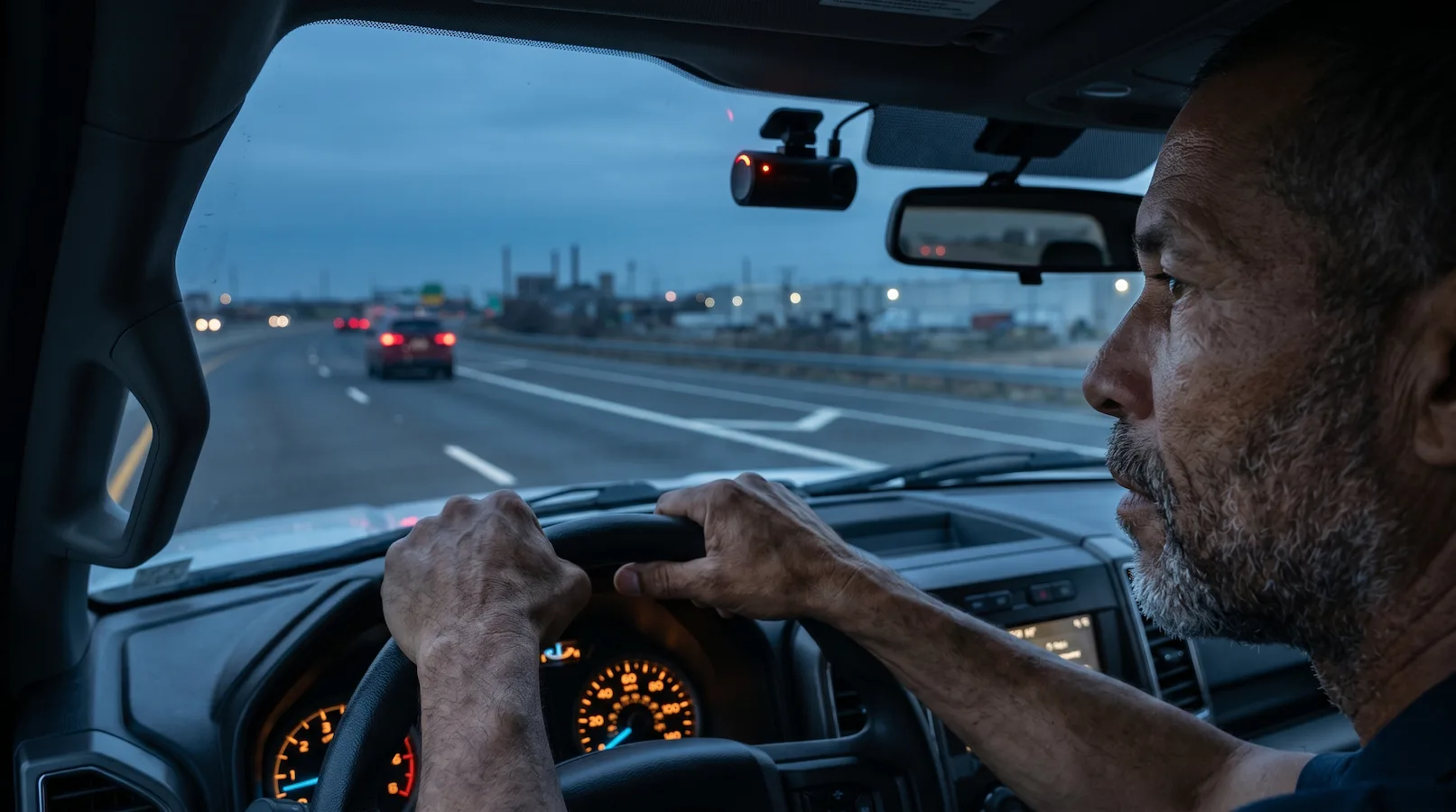
First, it sees. AI-enabled dash cams use computer vision to identify behaviors as they happen: drowsy driving cues, distraction (phone use, eyes off road), unsafe following distance, rolling stops, lane drift. The detection runs locally on the device — no streaming a live video feed back to the office.
Second, it intervenes. The driver gets an audio prompt in the cab the moment a behavior is detected. "Eyes on road." "Following distance." That single in-the-moment cue does more behavioral work than any post-trip review, because the consequence is immediate.
Third, it learns. The events get scored, aggregated by driver and by route , and surfaced to managers in dashboards. Coaching conversations are now anchored in evidence — short clips, frequency trends, before-and-after data — rather than vague feedback.
None of these capabilities are new individually. What's new is that they're now reliable enough, cheap enough, and fast enough to be operational rather than experimental. That's the 2026 inflection point.
Why the ROI math has finally tipped
Three things are converging this year that make AI-driven safety programs pencil out for fleets that previously couldn't justify them:
Insurance is rewarding it
Carriers are increasingly offering meaningful premium credits — often 5% to 15% — to fleets that can demonstrate active driver-coaching programs backed by video telematics. For mid-size and larger fleets, those savings can fully offset hardware and subscription costs in year one.
Hardware costs have dropped
Edge-AI dash cams that would have cost north of $1,000 per unit a few years ago are now in the $300–500 range, with subscription models that smooth the spend.
The labor case is real
A safety manager who used to spend hours reviewing footage to find the few clips worth a coaching session can now have those clips surfaced automatically. The same headcount can supervise two or three times more drivers — or, more realistically, can have two or three times more meaningful coaching conversations.
The cultural shift is the harder half
The technology is the easy part. The harder part — and the part that determines whether you actually see the safety gains — is the culture work that goes around it.
Drivers will resist if the system feels punitive. The fleets that succeed do three things deliberately:
They explain it as a coaching tool, not a surveillance tool, and they prove it by what they actually do with the data. If the only time a driver hears about their score is when they're in trouble, the system has failed.
They tie scores to recognition, not just discipline. Top-quartile drivers get called out. Most-improved drivers get called out. Coaching becomes something good drivers welcome because it's how they get noticed.
They make managers part of the system. The fleets where AI safety works are the ones where supervisors review coachable events weekly, hold short ride-alongs, and treat the dashboard as a conversation starter — not a gotcha generator.
What to look for in a 2026 program
If you're building or evaluating an AI safety program this year, the questions that matter most are operational, not feature-list:
- How fast does an event get from the road to a coachable moment? If your manager is reviewing last week's clips, you've already lost most of the behavioral leverage.
- Can the driver see their own data? Self-coaching is one of the most under-used levers. Drivers who can see their own score trend usually fix problems on their own.
- Does the platform integrate with your maintenance and operations systems? A safety event tied to a hard-braking trend that's tied to a brake wear pattern is a much more useful signal than three separate alerts.
- What does month-12 look like? Some programs spike attention for the first quarter and then drift. The discipline of weekly review meetings is what sustains the gains.
Where this is heading
Safety summits and industry events across 2026 are converging on the same message: the next two years will separate fleets that treat AI-driven safety as a real operational capability from fleets that treat it as a checkbox. The first group will see compounding gains — fewer incidents, lower premiums, better driver retention, less time lost to investigations. The second group will buy the cameras, file the reports, and wonder why nothing changed.
The technology is no longer the bottleneck. The willingness to actually run the program — every week, every month, with leadership backing it — is.
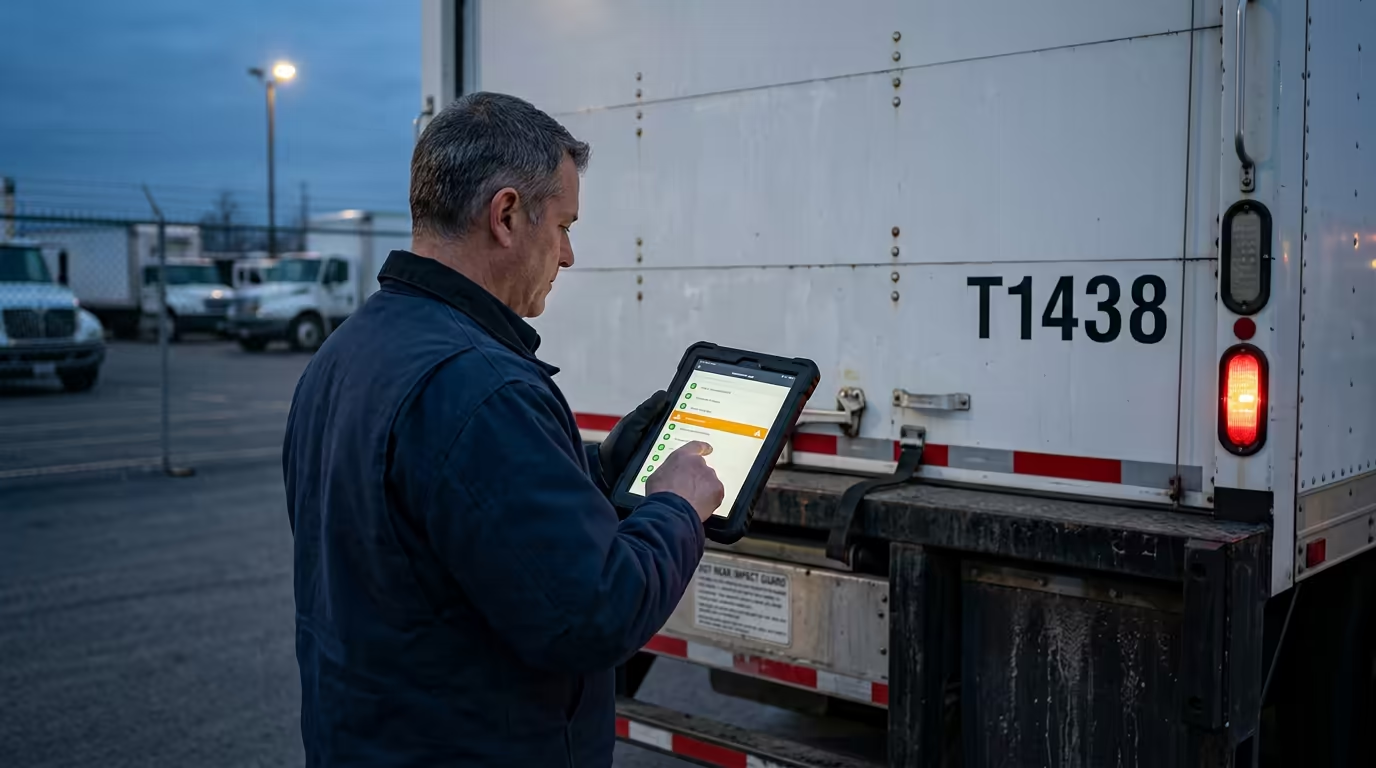
If you're planning your 2026 safety roadmap right now, that's the question worth asking before any vendor demo: are we ready to operate this, or are we just going to install it? Programs that combine in-cab AI with the same fleet's digital DVIR workflow compound faster, because driver-side defect signals and AI-detected behaviors live in the same coaching record.
Start a free 14-day trial. No credit card, no usage caps.
Start free trial →