Preventive Maintenance Checklist: A Fleet Operator's Guide
A preventive maintenance checklist for fleets — grouped by vehicle system and by interval tier (PM-A/B/C), then run as auto-generated work orders.
Key takeaways
- A PM checklist only works when every line has three things: a vehicle system, an interval, and a work order that forces it to happen — a checklist with no due date and no owner is a suggestion.
- Run it on two axes: by system (the master list, so nothing on the truck is skipped) and by interval tier (PM-A light/frequent, PM-B intermediate, PM-C comprehensive), triggered by whichever comes first — miles, engine hours, or a date.
- Tier contents are conventional but intervals are not universal — set your PM-A/B/C mileage and hour thresholds from your OEM spec and duty cycle, not a blog.
- Turn each tier into a recurring work order against the unit: interval due → WO opens with the checklist → tech logs parts and labor → WO closes into asset history → next interval auto-schedules. That closed, logged record is also your 49 CFR 396.3 "systematic maintenance" evidence.
- EVs still need PM — fewer fluids and filters, but new items: HV battery state-of-health, thermal-management coolant, the 12V auxiliary battery, and friction brakes that corrode from regen-braking disuse rather than wearing out.
Why half the PM sheets are blank
There's a binder in most shops with a stack of PM sheets in it, and half of them are blank. Not because nobody cares — because a checklist with no due date and no owner is a suggestion, and suggestions lose to the day's fires. A preventive maintenance checklist only earns its keep when every line has three things behind it: a vehicle system, an interval, and a work order that forces it to happen. This guide gives you all three — the master list grouped by system, the same items mapped onto PM-A/B/C tiers, and the handoff that makes a static checklist actually get done.
If you want the why — what preventive maintenance is and the four scheduling types — that's the companion explainer . This piece is the list itself, built to run.
How to Use This Checklist (Two Axes)
A usable fleet PM checklist works on two axes at once, and most templates give you only one.
- By system — what to put your hands on, truck by truck. This is the master list below, there so nothing on the vehicle gets skipped.
- By interval tier — how often and how deep. The same systems get a light touch often (PM-A) and a deep one rarely (PM-C). This is the cadence.
Trigger the cadence on whichever comes first — miles, engine hours, or a date. An over-the-road tractor wears by miles. An idling-heavy construction asset or yard truck wears by engine hours — the odometer barely moves while the engine racks up wear, so those go on the hour meter.
One boundary to keep straight: the daily pre-trip inspection is the driver's tier-zero check between PMs. PM-A/B/C is the shop's scheduled service. Different list, different owner; they feed each other.
The Master Preventive Maintenance Checklist (by System)
This is the copy-ready core — a vehicle maintenance checklist grouped the way a tech actually walks a unit. Run the depth your tier calls for (see the next section).
Engine, Oil & Filters
- Oil level and condition; change oil and oil filter per spec.
- Fuel filter(s) and water separator; air-filter restriction indicator.
- Belts and hoses — cracks, glazing, fraying, tension.
- Visible leaks; valve-cover and oil-pan seepage.
Cooling System
- Coolant level and condition (SCA/nitrite or OAT per spec).
- Radiator and charge-air-cooler fins clear; hoses and clamps tight.
- Water-pump weep hole; fan and fan clutch; pressure cap.
Brakes
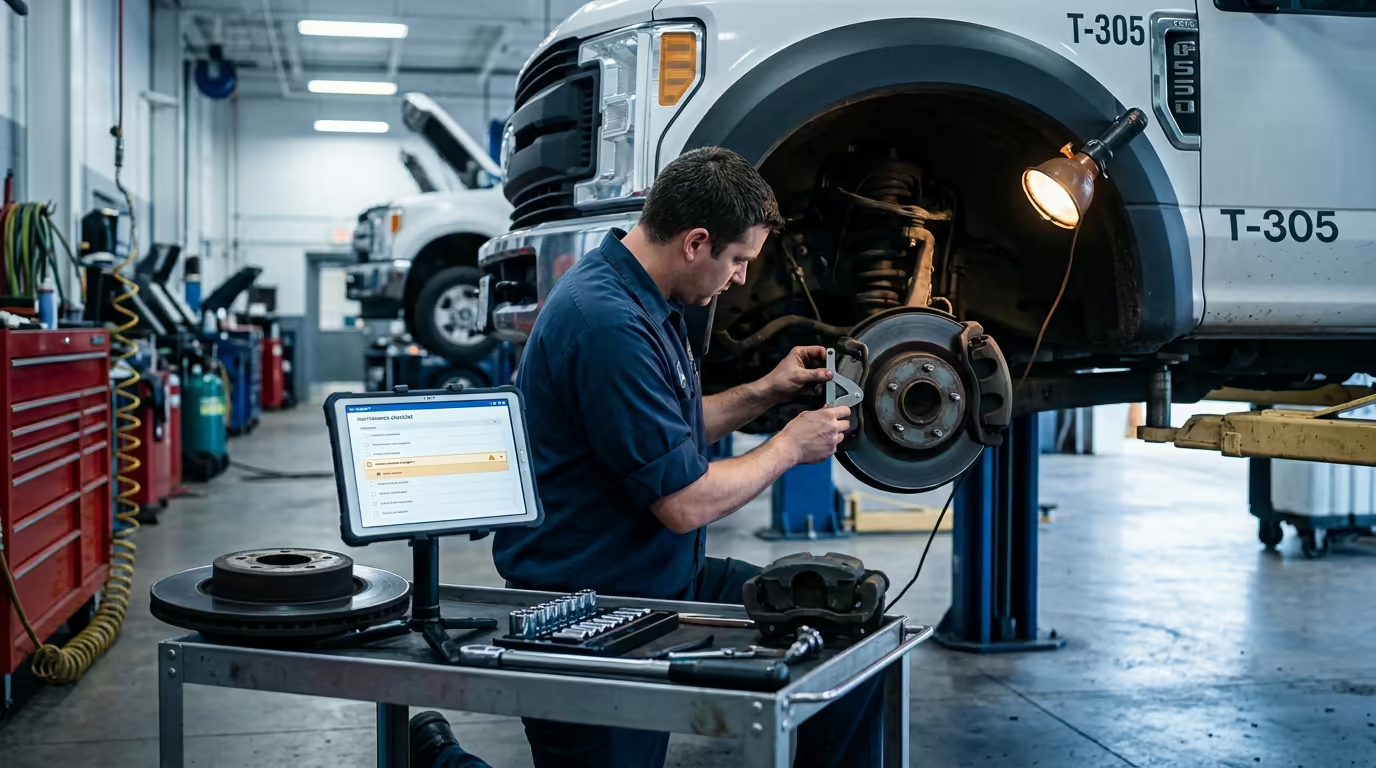
- Lining or pad thickness; drums and rotors.
- Chambers and slack adjusters — pushrod stroke within limits.
- Air lines and hoses; low-air warning; governor cut-in/cut-out.
- ABS lamp behavior; park/spring brake.
Tires & Wheel Ends
- Tread depth and irregular wear; inflation to spec (measured cold).
- Sidewalls — cuts, bulges, abrasions; valve caps present.
- Wheel-end seals and hub-oil level; lug torque; no rust streaks; bearing play.
Steering & Suspension
- Steering play and linkage; kingpins or ball joints; tie-rod ends.
- Springs and leaves; shocks; U-bolts; bushings.
- Air-bag suspension and ride-height control, where equipped.
Electrical & Battery
- Battery state, voltage, and load test; terminals and cables (clean, tight).
- Alternator output; starter; ground straps; charging-system check.
Lights & Reflectors
- Headlights high and low, markers, turn, brake, hazard, reverse, plate light.
- Reflectors and conspicuity tape; trailer cord and connections.
Fluids
- Transmission, differential/axle, power steering, hydraulic (if equipped), washer.
- Level and condition; service per interval; look for leaks at each.
Exhaust & Aftertreatment (DPF/DEF/SCR)
- Exhaust leaks and mounting.
- DEF level and quality; DPF soot load and active-regen behavior.
- Pull fault codes — scan the ECM and act on diagnostic trouble codes.
Body, Cab & Safety Equipment
- Wipers and washer; mirrors; horn; seatbelts; HVAC and defrost.
- Doors and latches; fifth wheel/coupling or hitch; mud flaps.
- Fire extinguisher, warning triangles; registration and insurance.
That list isn't busywork. It maps closely to the parts and accessories FMCSA expects you to keep "in safe and proper operating condition at all times" under 49 CFR 396.3 — so a clean PM is also a clean maintenance record.
The Checklist by Interval — PM-A, PM-B, PM-C
Same systems, different depth. Here's the PM checklist by interval, light to deep, each tier swallowing the one below it.
- Daily / pre-trip (tier zero). The driver's walk-around — safety items, leaks, lights, tires, brake feel. Not a shop PM; it's what catches the cracked lens or the air leak that shows up on a random Tuesday.
- PM-A — light and frequent. Oil and filters, fluids checked and topped, lights, tires, a brake look-over, safety equipment, and a quick DTC scan. Your most common touch.
- PM-B — intermediate. Everything in A, plus the deeper brake inspection (measure linings, check stroke), driveline, scheduled fuel/air filters, cooling-system service, and fluid sampling on wear items.
- PM-C — comprehensive. A and B, plus the major systems: transmission and differential service, a deep steering/suspension check, and alignment. Where it lands on the calendar, PM-C is also when many fleets schedule the DOT periodic inspection.
The part every checklist site gets wrong: the tier contents are conventional, but the tier intervals are not universal. Published PM-A intervals range from roughly 5,000 to 15,000 miles depending on who's writing — because the real number is set by your OEM spec and your duty cycle, not a blog. Set yours off your own schedule.
Turn the Checklist Into Work Orders (So It Actually Gets Done)
Here's the move nobody else makes. A checklist on paper is a suggestion; the same checklist as a recurring work order is a job — with an owner, a clock, and a close date.
The loop that makes it stick is short:
That's how a PM goes from "we meant to" to done. Each tier becomes its own work order against a specific unit — a PM-B due on unit 14 is a job, not a tick on a whiteboard.
There's a compliance payoff, too. Under 49 CFR 396.3, every motor carrier must systematically inspect, repair, and maintain the vehicles under its control, keep parts "in safe and proper operating condition at all times," and keep maintenance records — current records for each unit controlled 30 days or more, retained a year while you run the vehicle and six months after it leaves your control. A PM run as a closed work order, logged to the unit, is that systematic, documented record.
This is where the right tooling earns its keep. In FS365, you schedule PMs by mileage or engine hours so a due interval auto-generates the work order against the right unit — the checklist gets an owner the moment it's due. One example of the loop done right; the principle holds no matter what you run.
A Note on EVs and Alt-Fuel
The structure doesn't change for an electric or alt-fuel unit — system, interval, work order. The line items do.
The big one is brakes. Regenerative braking does most of the slowing, so friction brakes wear far less — but they corrode more. Calipers seize and rotors rust from disuse, so you inspect for corrosion and sticking, not just lining thickness, and flush fluid on the OEM schedule even if the pads look fine. Then add the EV lines: high-voltage battery state-of-health, thermal-management coolant, charge-port and HV-cable condition, and the humble 12V auxiliary battery — a dead 12V is a top reason an EV won't wake up at dispatch even on a full charge.
What a Real PM Checklist Does to Your Numbers
A checklist that runs as work orders moves the KPIs you're graded on:
- PM compliance % — the share of due PMs completed on time. The checklist makes it auditable; the recurring work order makes it measurable.
- Vehicle downtime — scheduled bay time beats a roadside failure, and wear caught at PM-A doesn't cascade into a PM-C-sized bill.
- Cost per mile — parts and labor on every closed PM work order roll into a real per-asset cost, and planned service beats emergency rates every time.
- Asset history — each closed PM is a dated record on the unit, which is exactly what a DOT auditor asks to see.
Frequently Asked Questions
What should be on a preventive maintenance checklist?
The vehicle systems — engine/oil and filters, cooling, brakes, tires and wheel ends, steering/suspension, electrical/battery, lights, fluids, exhaust/aftertreatment, and body/safety equipment — inspected at the depth the interval tier calls for.
What's the difference between PM-A, PM-B, and PM-C?
Light-to-deep service tiers. PM-A is frequent and light (oil, filters, a safety look-over); PM-B adds deeper brake and driveline inspection; PM-C is comprehensive (major systems, often timed with the DOT periodic inspection). Each tier includes the ones below it.
How often should each PM be done?
There's no universal number. Intervals are set by OEM spec and duty cycle and triggered by whichever comes first — miles, engine hours, or a date. Pull yours from your maintenance schedule, not from a blog.
Should PM be tracked by miles or engine hours?
Both — whichever trips first. Over-the-road tractors wear by miles; idling-heavy assets like construction equipment and yard trucks wear by engine hours.
How do I make a PM checklist actually get done?
Turn each tier into a recurring work order against the unit, triggered by its interval, with an owner and a close date. A checklist with no due date and no owner is a suggestion.
Does an EV need preventive maintenance?
Yes — fewer fluid and filter items, but new ones: HV battery state-of-health, thermal-management coolant, the 12V auxiliary battery, and friction brakes that corrode from regen-braking disuse rather than wearing out.
Start a free 14-day trial. No credit card, no usage caps.
Start free trial →