Pest Control Compliance Records: What a State Inspection Asks For
A state pest control inspection asks for three things: what you applied, what you're driving, and who's licensed to do the work. Only the first belongs to your dispatch platform — here's what a fleet system owns, and how long to keep it.

Key takeaways
- A state pest control inspection asks for three kinds of records: what was applied, what vehicle carried it, and who's licensed to have done the work — and they don't all live in the same system.
- Application records — product, site, rate, date, applicator — belong in the dispatch or routing platform (PestPac, FieldRoutes, ServSuite), not in fleet software; retention periods for them vary by state and are that platform's job to enforce.
- The fleet side of the audit is the vehicle and the operator: maintenance history and a daily inspection record for the truck, and a current, dated license or certification for the technician who drove and sprayed from it.
- Applicator license renewal cycles vary by state and sometimes by certification tier, so track each operator's credential on its own clock rather than one fleet-wide reminder date.
- Vehicle maintenance history has no reason to be deleted — keep it for the life of the asset. Operator credentials are the one record worth over-retaining: hold the prior certification alongside the current one for a while after a renewal.
What an inspector actually asks for
A state inspector calls ahead, or doesn't, and asks to see three things: what you applied, what you're driving, and who's licensed to do the work. None of that comes with a redesigned filing system attached — it comes with a clipboard, sometimes a laptop, and a request to see whatever records already exist. The pest control operations that struggle in that moment usually aren't doing bad work. Their paperwork just can't keep up with the work they're already doing correctly.
Those three questions point at three separate records, and they don't all live in the same place. What was applied — the chemical, the site, the date, the rate — is a service record that belongs to whatever runs your routes and writes the invoice. What you were driving, and who was licensed to drive and spray from it, are fleet and operator records, and that's the half of an inspection a fleet system is actually responsible for.
This post covers all three: briefly on the first, because that record belongs somewhere else, and in real depth on the other two, because that's the part worth getting right. It roughly mirrors how a state inspection actually runs — a quick check on what was applied, then a longer look at the truck and the person who ran it.
Application records (and where they belong)
An inspector reviewing what was applied is usually looking for the same handful of fields on every service record: the product and its EPA registration number, the site and target pest, the date and time, the application rate, and the applicator who did the work. Most state programs require some version of that list, retained for a period the state sets. That period varies enough by state, and sometimes by product class, that repeating a single number here would be wrong for whoever is reading it looking for their own answer.
That record belongs in whatever platform runs your routes, schedules your technicians, and generates the invoice — PestPac, FieldRoutes, ServSuite, or whatever your operation runs. It isn't a fleet record. A fleet platform trying to own it too would just be a second, worse copy of data your dispatch system already has and already reports from. If application recordkeeping is the actual gap you're trying to close, that's a conversation with your dispatch vendor, not your fleet vendor.
Vehicle and operator records
Everything below is what an inspector looks at once the service record checks out: the truck, and the license behind whoever drove it. It's also the actual job of pest control fleet software — not because a dispatch platform can't hold a maintenance date in a custom field, but because a fleet system is built to make vehicle and operator compliance the primary record instead of an afterthought bolted onto a routing tool.
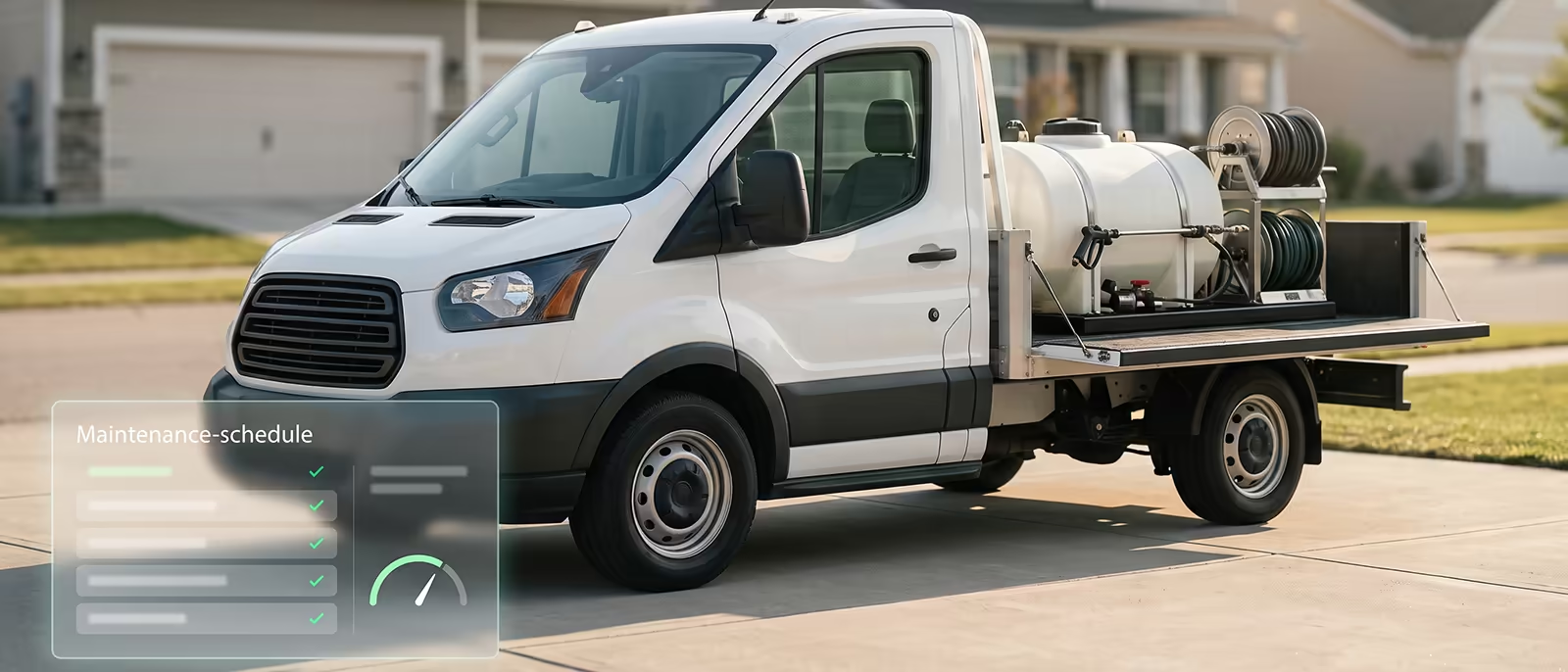
Start with the vehicle. An inspector who walks out to the truck is checking that a tank is mounted the way it should be, that a spill kit and PPE are where they belong, and generally that a vehicle carrying chemical inventory looks like it's in the kind of condition that doesn't turn a routine stop into an incident. None of that gets decided in the moment. It's the output of whatever maintenance program has been running on that unit for months, and a pest control duty cycle is hard enough on a chassis that a skipped interval shows up fast.
The paper trail behind that condition is vehicle maintenance records — PM history, the last brake job, the sprayer system's own service log. Keeping it against the vehicle's own record instead of a shop's paper folder turns a compliance question about that truck into a one-line answer instead of a phone call to three people.
Maintenance history says the truck was serviced on schedule. It doesn't say anything about today. That's the other half of the vehicle record: a daily check before the truck leaves the yard, one that catches a leaking hose fitting or a loose tank strap before an inspector — or a customer — finds it first.
The record of that daily check is a DVIR — a driver vehicle inspection report. Running one every morning does double duty: it's a safety habit regardless of who's watching, and it turns a guess about the truck's condition into a dated, signed record instead.
- Preventive maintenance history and completed work orders
- Daily pre-trip inspection records
- Safety data sheets (SDS) for the products carried on the truck
- A spill kit and PPE checklist
- The sprayer tank and pump calibration log
None of that is exotic. It only feels scattered when it lives in five places instead of one — attached to the vehicle's own record instead of scanned into a shared drive nobody opens until an inspector asks.
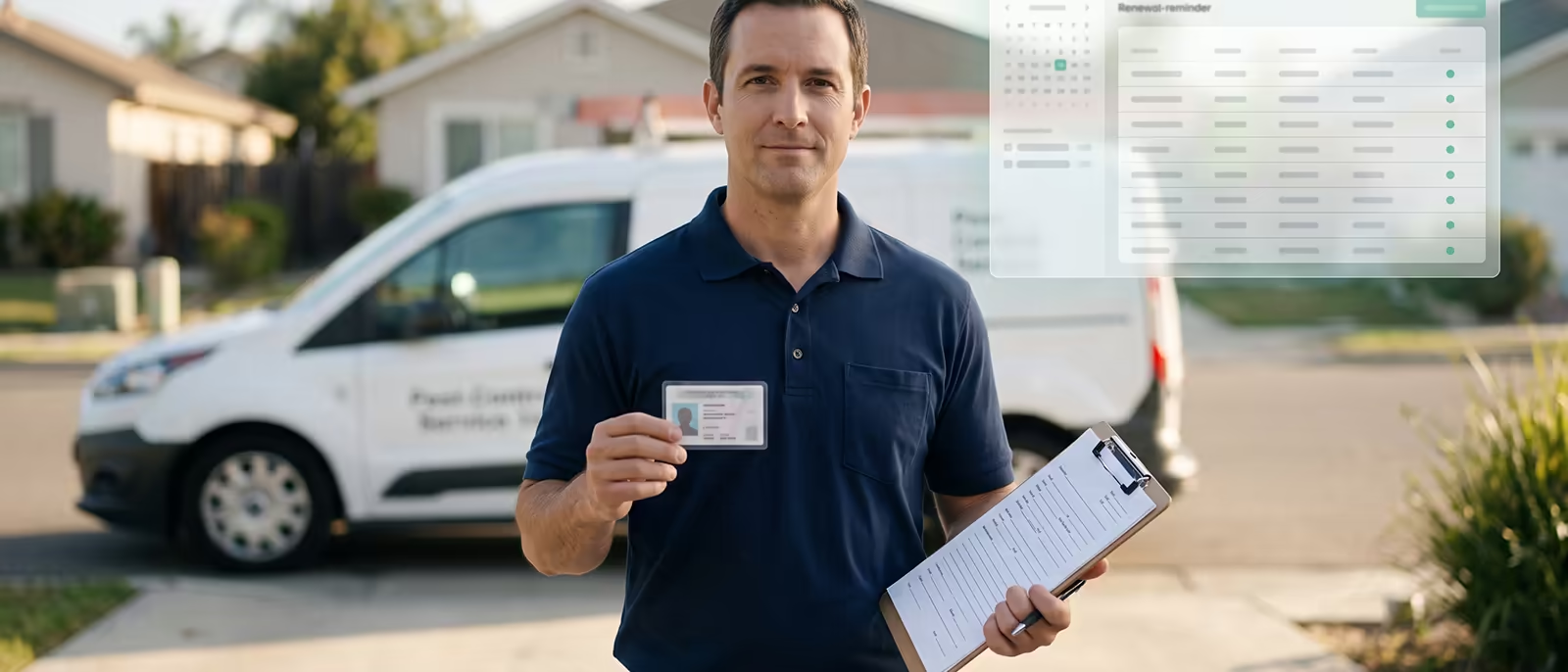
The other record an inspection checks is the person, not the vehicle. A technician's certification — commercial pesticide applicator license, structural pest control license, a fumigation endorsement, whatever category applies — has an issue date, an expiration date, and usually a recurring training requirement behind it. An inspector doesn't need to see the training itself. They need to see that it happened, and that the license was current on the date of the work in question, not just today.
Those cycles aren't uniform — applicator license renewal cycles by state run anywhere from one year to several, some states split authority between an agriculture department and a structural pest board, and a technician working across state lines can be juggling more than one clock at once. Track each one per operator, the same way you'd track a vehicle's registration, instead of trusting every technician to flag their own card before it lapses.
- License or certification number and category
- Endorsements — structural, fumigation, or others that apply
- Issue and expiration dates
- Recurring CEU or training hours completed, and when
Put the vehicle side and the operator side on the same kind of record — dated, attached to the specific asset or the specific person, pulled up instead of dug up — and the second half of a state inspection stops being a scramble. The truck answers for itself. So does the license.
How long to keep what
How long you keep each of these records depends on which family it's in, and the honest answer isn't the same length for all three.
Application records are the one where a single number would be wrong for somebody reading it. Retention periods vary by state and sometimes by product class, and enforcing them is your dispatch platform's job, not a fleet system's. If that's the specific question you're trying to answer, it's a conversation with your state agency or whoever runs your PestPac, FieldRoutes, or ServSuite instance.
Vehicle maintenance history doesn't have that problem. There's no regulatory floor telling you to delete it, and plenty of reason to keep it for as long as you own the asset — it's what a warranty claim, a resale conversation, or a pattern of repeat repairs all draw on later. A daily inspection record is a little different: if a vehicle falls under federal DOT rules, there's a specific floor on how long a DVIR has to be kept. Plenty of pest control fleets never trip that threshold — most service vans aren't operating under FMCSA's jurisdiction at all — but keeping the record anyway costs nothing and answers the question before it's asked.
Operator credentials are the one place it pays to keep more than the current card. Hold onto the prior certification alongside the new one for a while after a renewal, not just the active license. An inspector checking a job from four months ago wants to see the technician was licensed on that date, and a folder holding only this year's card doesn't answer that.
Frequently Asked Questions
What records does a state pest control inspection typically check?
Three families: application records showing what was used, where, and when; vehicle records showing the truck carrying chemical inventory is maintained and was inspected before it rolled; and operator records showing the technician's license or certification was current for the work in question. The first lives in your dispatch or routing platform. The other two are what a fleet system is responsible for.
Should pesticide application records be stored in fleet management software?
No. Application records — the product, site, target pest, rate, date, and applicator — belong in the platform that runs your routes and writes the invoice, such as PestPac, FieldRoutes, or ServSuite. A fleet system's job is the vehicle and the operator credential behind it, not a second copy of a record your dispatch software already owns.
What vehicle records does a pest control inspection check?
Maintenance history showing the truck has been serviced on schedule, and a recent pre-trip inspection record showing it was checked before it left the yard. Inspectors also tend to look at the truck itself — tank mounting, labeling, whether a spill kit and PPE are where they should be — and a maintained vehicle is more likely to have all of that in order too.
How do you track applicator license renewals across a crew?
Per operator, the same way you'd track a vehicle's registration or insurance — license number, category, expiration date, and recurring training hours, with an alert before the renewal window closes. Renewal cycles vary by state and sometimes by certification tier, so one fleet-wide reminder date doesn't work; each technician's credential needs its own clock.
Does Fleet Service 365 handle pesticide application recordkeeping?
No. That's the job of your dispatch or routing platform. Fleet Service 365 handles the fleet side — vehicle maintenance history, inspection records, and operator credentials — with photos and PDFs attached directly to the asset or the technician's record, so the document an inspector asks for is one lookup instead of a search across three systems.
Start a free 14-day trial. No credit card, no usage caps.
Start free trial →