
Pest Control Truck Maintenance: PM Schedules for Sprayer-Equipped Vans
A pest control van's duty cycle — short trips, PTO-loaded idle, and a sprayer tank that changes weight by the hour — wears trucks faster than the odometer shows. Here's how to set PM intervals, maintain the sprayer system, and spot a truck aging out.
Key takeaways
- A pest control van's duty cycle is unusually hard on a vehicle: short trips that never fully warm the drivetrain, extended idle with the PTO engaged while the pump runs, and tank weight that swings by several hundred pounds between the first stop and the last — none of which shows up on the odometer.
- Set PM intervals off the manufacturer's severe-service column, not the standard one, and trigger service on engine hours as well as mileage — mileage alone hides the wear that accumulates while a sprayer van sits idling and loaded at a stop.
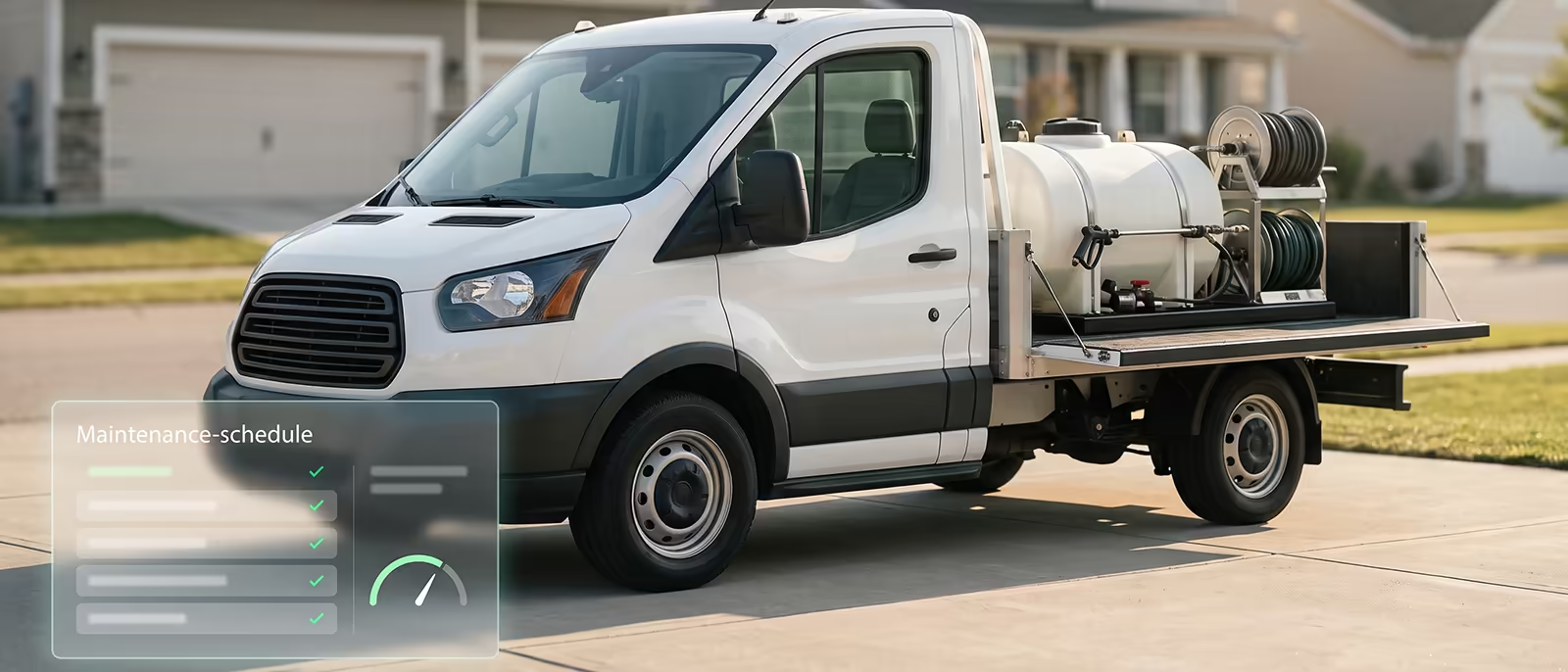
- The sprayer system — pump, seals, hose, reel, and tank mounting — wears from chemical exposure and pressure cycling, not miles driven, and needs its own inspection interval logged against the same asset record as the chassis PM.
- Watch cost per mile per truck, not individual repair bills in isolation — repeat repairs on the same system, creeping downtime, and frame or brake-line corrosion from chemical exposure are the earliest signals that a truck has crossed from worth fixing to worth replacing.
- Keeping a van road-ready and keeping its applicator's license current are two halves of the same requirement — either one lapsing takes the route off tomorrow's board, so both belong on the same weekly review.
The duty cycle a pest control van actually sees
Picture a typical route: several stops packed into a few square miles, none more than a few minutes apart, a sprayer tank riding on the back that is full at the first stop and mostly empty by the last. The engine barely reaches operating temperature before the PTO clutches in and the pump runs again at idle. Spread that pattern across a full week, and the duty cycle looks nothing like the one a manufacturer's default PM schedule was written against.
That gap is worth naming directly. OEM maintenance intervals assume mixed driving — enough highway time for the engine, transmission, and emissions system to reach and hold full operating temperature between services. A pest control van rarely gets there. It idles loaded, it short-trips constantly, and the tank on the back changes weight by the hour. None of that shows up on the odometer, which is the only number a default schedule is built around.
- Stop count and trip length — parking lot to parking lot, a route van accumulates far more start-stop cycles per mile than the mileage figure implies, which is hard on brakes, the starter, and the transmission.
- PTO run time at idle — the pump draws off the engine while the truck is stationary, so the hour meter keeps climbing after the GPS shows zero speed, banking engine hours that a mileage-only schedule never counts.
- Load that swings through the day — a full tank, commonly a few dozen to a few hundred gallons on a skid-sprayer setup, can run several hundred pounds heavier than the same truck empty, so brakes, tires, and suspension components see a moving target instead of a fixed curb weight.
- Short trips that never fully warm the drivetrain — engine, transmission fluid, and emissions system rarely hold full operating temperature on a short hop between stops, which concentrates condensation and unburned fuel in the oil and can leave a diesel's aftertreatment system short on the runtime it needs to complete a regeneration.
None of this is unique to any single crew — it is the standard shape of pest control fleet management , worth treating as its own category rather than a rougher version of a generic delivery route. The rest of this post builds a PM schedule and a replacement-cost read around that shape, instead of around the mileage figure a general-purpose schedule was written for.
Setting PM intervals around that duty cycle
Start from the manufacturer's severe-service column, not the standard one. Most OEMs already publish a shorter interval for exactly the conditions above — frequent short trips, extended idle, stop-and-go driving — and a sprayer van qualifies on nearly every count. A PM template still pulling from the standard-service column is already running behind before the first missed interval.
Mileage still is not the whole picture, because a real share of the wear on this duty cycle happens with the truck parked and the PTO engaged. That is why the more reliable trigger for oil changes, transmission service, and PTO or pump maintenance is engine hours alongside odometer miles — set the PM to fire on whichever threshold comes first, and idle-heavy days stop hiding inside a mileage number that barely moved.
The task list underneath the interval does not need to be reinvented — a preventive maintenance checklist covering fluids, filters, brakes, belts, and undercarriage still applies to a sprayer van the same way it applies to any service vehicle. What changes for this duty cycle is the interval it runs on, plus a handful of line items the generic version does not carry: PTO clutch and pump-drive inspection, tank mount and strap check, and a look at wiring and hose routing anywhere a full tank could rub against the frame.
Log every completed PM against the asset rather than a paper card in the glovebox. Vehicle maintenance history is routinely part of the records an inspector asks for , especially for trucks carrying chemical inventory, and a closed work order with a timestamp and a technician's name answers that question in one lookup instead of a search through a filing cabinet.
The application system is an asset too
The chassis and engine get a PM schedule by default. The sprayer system — tank, pump, hose reel, reel motor, plumbing, and nozzles — usually does not, because it is not the thing a state inspection or a DOT form asks about first. That is backwards for a fleet where a dead pump takes a truck off the route just as completely as a dead alternator.
- Pump and seals — diaphragm and seal wear tracks chemical exposure and duty cycle, not mileage; inspect for weeping, pressure drop, and cycling noise on a fixed interval instead of waiting for a technician to report a problem mid-route.
- Tank and mounting — check mount hardware, straps, and bed liner for chafing under a full load, and inspect the tank for stress cracking near fittings, where the weight cycling described above concentrates fatigue.
- Hose, reel, and fittings — chemical-rated hose degrades from the inside before it shows anything on the outside, so a scheduled replacement interval catches wear before a fitting lets go under pressure at a customer's property.
- Calibration — a pump or nozzle set that has drifted off calibration does not just under- or over-apply product, it turns a routine service call into a callback, and a callback costs a route slot the same way a breakdown does.
Build this into the same PM record as the chassis work rather than a separate binder, so service history and calibration dates are one lookup instead of two systems. Treat it as half of what keeps a route legal to run tomorrow — the other half is the technician behind the wheel. A van with a signed-off sprayer system and a lapsed operator credential still cannot run the route, so keeping applicator licenses current belongs on the same weekly review as the PM board, not a separate task nobody owns.
Cost signals that a truck is aging out
Every van eventually crosses the line from worth fixing to worth replacing. On a duty cycle this hard on brakes, suspension, and a chassis exposed to chemical residue, that line usually arrives well before the odometer would suggest — corrosion on the frame and undercarriage from chemical drift and washdown water is a common early failure point that a mileage-based replacement schedule does not anticipate.
The clearest way to see the trend before it becomes obvious is tracking cost per mile per truck rather than judging each repair bill in isolation. A single brake job does not mean much on its own. A brake job, a pump replacement, and a climbing count of aftermarket or warranty parts on the same unit inside a year does — and a rising per-asset cost-per-mile line shows that pattern well before a driver flags the truck as unreliable.
- Repeat repairs on the same system — brakes, suspension bushings, or the PTO and pump drive coming back inside one PM cycle usually means a part is being replaced like-for-like without the root cause being addressed, or the truck has simply worn past economical repair.
- Downtime creeping up — a route van that used to lose a few hours to service and now loses most of a day is taking a stop off the board every time it is in the shop, and that cost rarely shows up on the repair invoice itself.
- Corrosion on the frame, subframe, or brake lines — chemical exposure accelerates this well beyond what road salt alone would cause, and once it reaches structural components a truck is closer to the end of its service life than its age or mileage would suggest.
- Parts availability and lead time — older platforms start pulling used or aftermarket parts with longer wait times, and that wait is itself a cost: a truck sitting on a part is a truck not running a route.
None of these signals is dramatic on its own. Tracked per asset instead of judged from memory, together they turn a replacement decision from a gut call into a number worth defending.
Frequently Asked Questions
How often should a pest control van get an oil change?
Follow the manufacturer's severe-service interval rather than the standard one — frequent short trips, extended idle, and stop-and-go driving are exactly the conditions that column is written for, and a sprayer van meets nearly all of them. Where the platform supports it, set the PM to trigger on engine hours as well as mileage, since PTO-loaded idle time ages oil without moving the odometer.
What makes a pest control truck's duty cycle different from a typical service van?
Three things stack together: a high stop count with very short trips between them, extended idle time with the PTO engaged while the pump runs, and a load that changes by several hundred pounds between the first stop of the day and the last. Any one alone is manageable; combined, they wear brakes, the drivetrain, and the sprayer system faster than the odometer suggests.
How do you build a PM schedule around short trips and constant idle?
Trigger service on whichever comes first, mileage or engine hours, instead of mileage alone, and start from the manufacturer's severe-service intervals rather than the standard column. That combination catches the wear that accumulates while a truck idles loaded at a stop, which a mileage-only schedule never sees.
Does the sprayer system need its own maintenance schedule?
Yes. The pump, seals, hose, reel, and tank mounting wear from chemical exposure and pressure cycling, not from miles driven, so they need their own inspection interval rather than riding along with the chassis PM. Logging both under the same asset record keeps the full service and calibration history in one lookup.
What are the warning signs that a pest control truck is aging out?
Repeat repairs on the same system inside one PM cycle, downtime that is creeping up visit over visit, visible corrosion on the frame or brake lines from chemical exposure, and a per-asset cost-per-mile line climbing relative to the rest of the fleet. Any one of these is worth a look; two or three together usually mean the truck has crossed from worth fixing to worth replacing.
Can fleet maintenance software track service intervals by engine hours instead of mileage?
Yes. A PM program built around dual triggers, mileage or hours, whichever comes first, is standard in fleet maintenance platforms built for asset-based servicing rather than passenger-vehicle scheduling, and it is the right model for any truck that spends real time idling loaded, sprayer vans included.
Start a free 14-day trial. No credit card, no usage caps.
Start free trial →